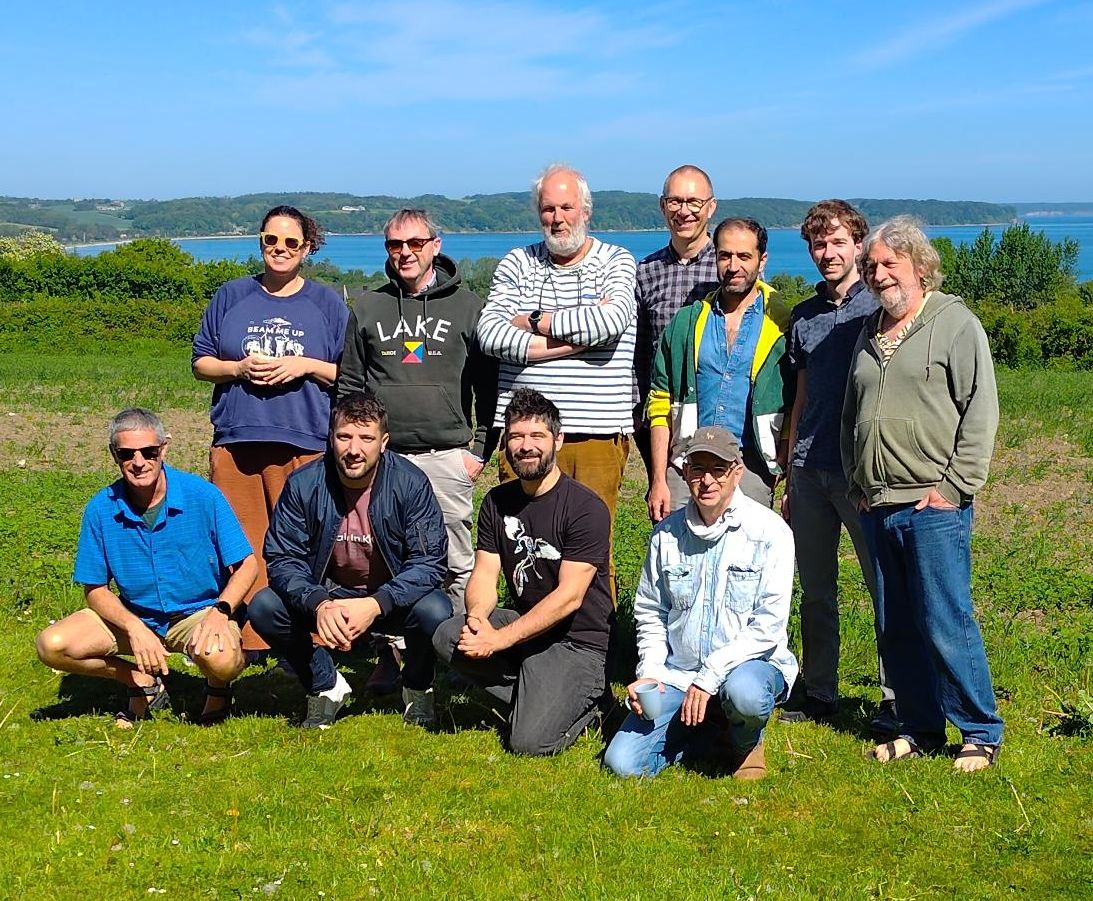
The MEWS project had it third annual meeting in Middelfart Denmark between 25-28 May 2026. As the project is now well advanced, the focus of the meeting was to
ensure that all project deliverables are on track to be completed on time and plan
for the final year of work. During the first days of the meeting a detailed
update on the ongoing work at each study site was presented. From this we identified three topics that would benefit from comparative studies at all three sites
1) A general introduction to the MEWS project, the study sites, the common modeling methodology used, and the importance of in lake processing on extreme event conditions. This will be illustrated by a comparative study of how each
site responds to an extreme hydroclimatic event.
2) An analysis of how individual hydroclimatic extreme events can effect drinking
water quality over short-tine scales, and also how the impact of events depends
on watershed and water body conditions proceeding the event.
3) Long-term changes in the linkage between watersheds and lakes/reservoirs as a
consequence of climate change. Climate change is leading to changes in the
seasonality of both streamflow and lake thermal stratification. This paper
will evaluate how these two regulators of water quality interact and how this
can be expected to change under future climate conditions.