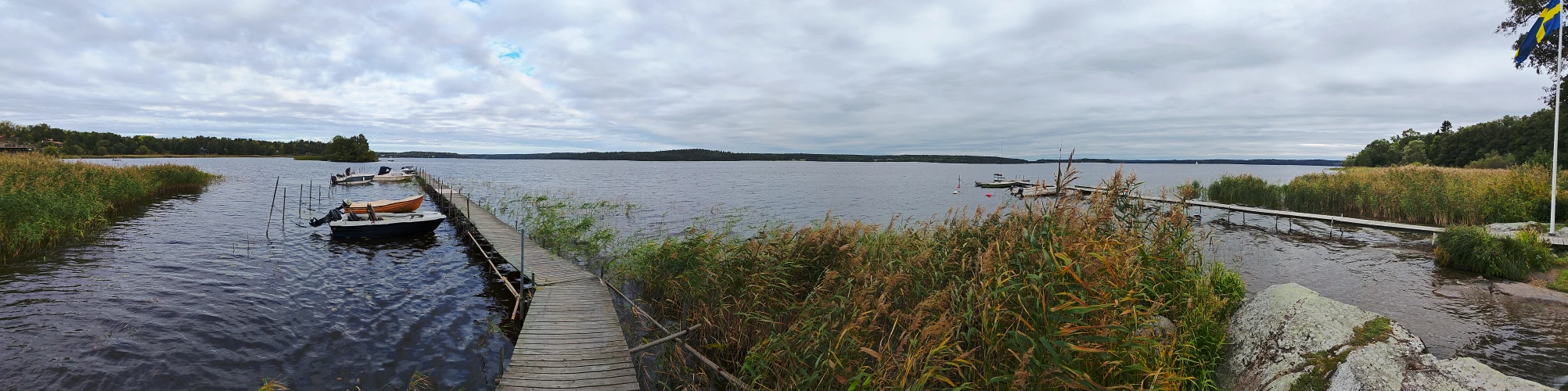
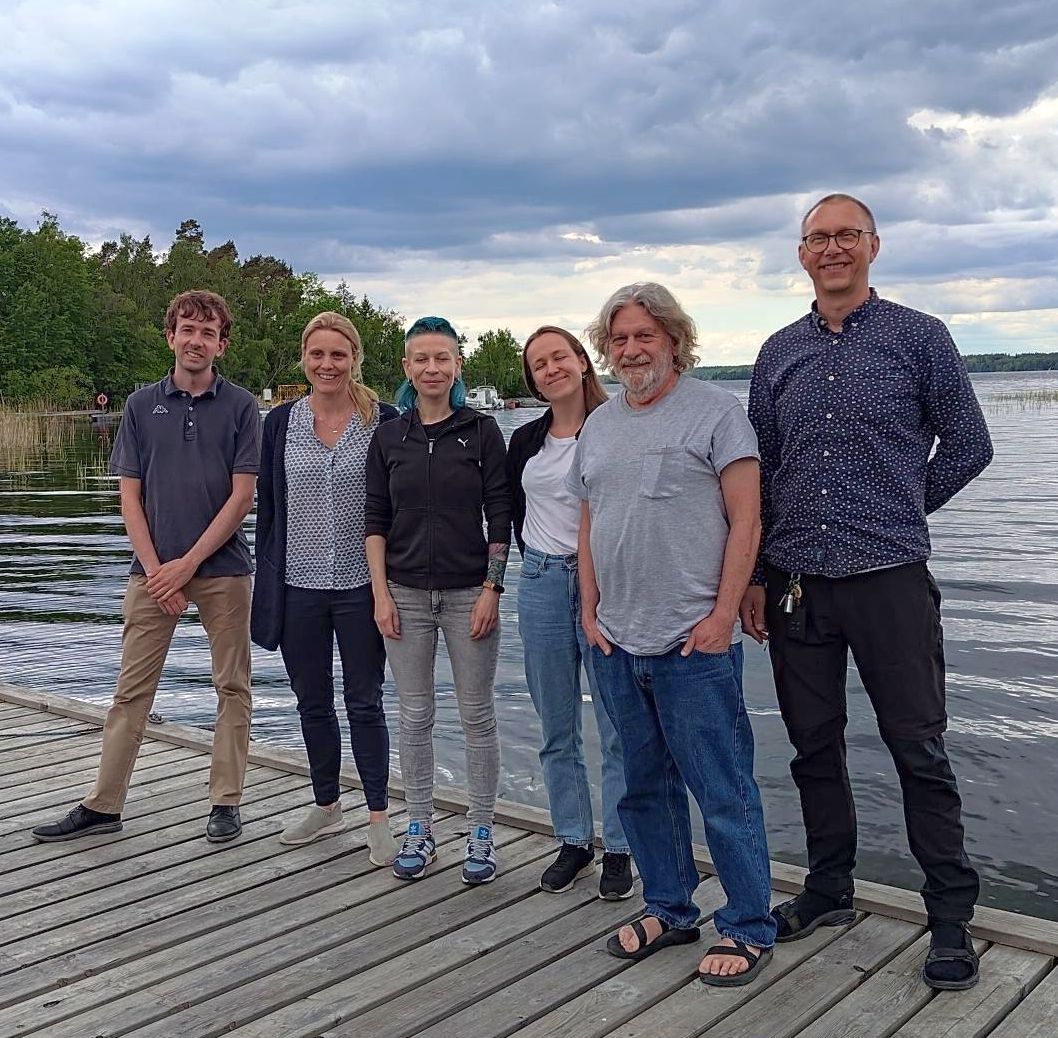
The MEWS Swedish group met with stakeholders from the two Stockholm water
supplies, Stockholm Vatten och Avfall and Norrvatten, that depend on Lake
Mälaren as a water source. This was a joint meeting with the Water4All project
EcoTwin (https://www.bangor.ac.uk/ecotwin) which is also working with the same stakeholders to develop a digital twin that will address Mälaren water quality issues, and compliment thework undertaken by MEWS. In the first half of the meeting the EcoTwin project was presented to the stakeholders and they were asked to define the water quality issues and ecosystem services that are most important for water supply operation, and which could be included in the digital twin. In the second half of the meeting the MEWS project updated the stake holders on the progress of the model development, and model results for Lake Mälaren, including progress in water quality calibration and 3D modeling. Results of Master student projects co-supervised by MEWS and the water utilities were presented. Finally we also evaluated our progress on simulating extreme events identified by the stakeholders as test cases for the MEWS modeling system.
-
Swedish Stakeholder Meeting
-
MEWS Third Annual Meeting
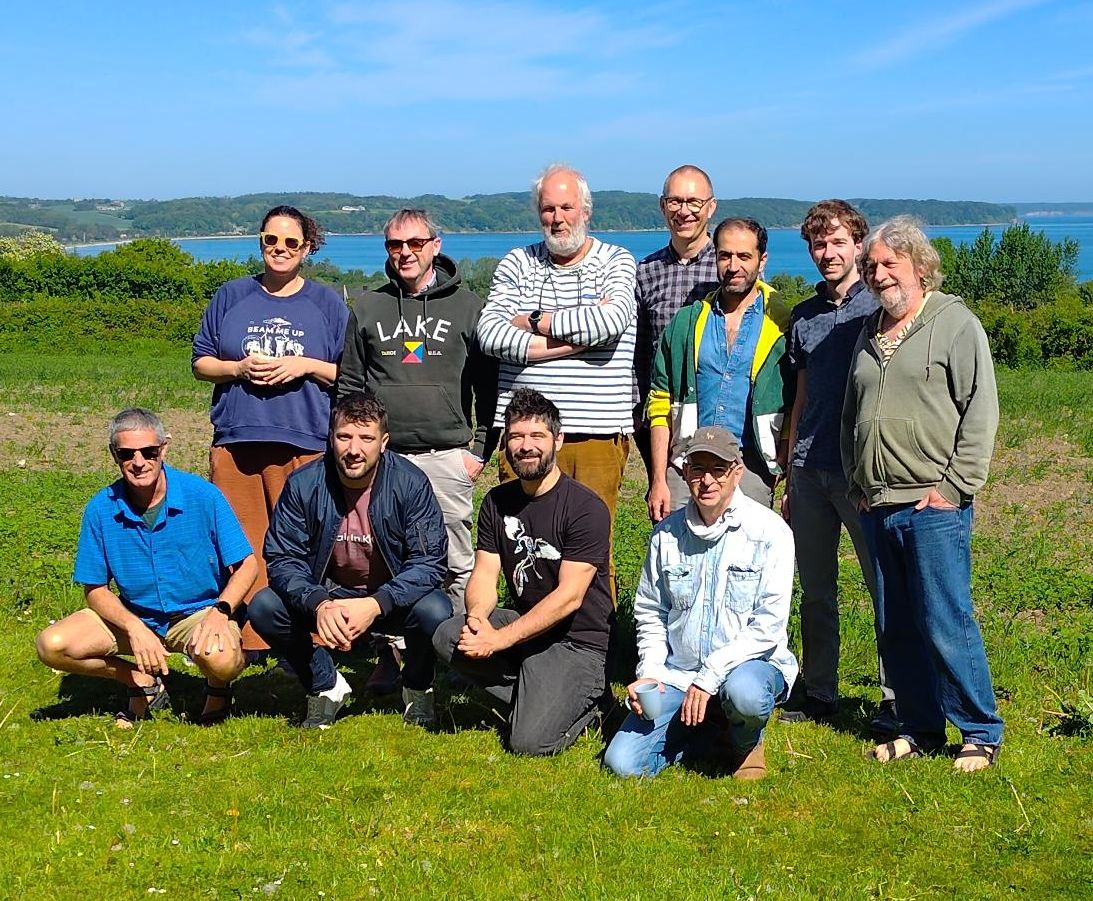
The MEWS project had it third annual meeting in Middelfart Denmark between 25-28 May 2026. As the project is now well advanced, the focus of the meeting was to
ensure that all project deliverables are on track to be completed on time and plan
for the final year of work. During the first days of the meeting a detailed
update on the ongoing work at each study site was presented. From this we identified three topics that would benefit from comparative studies at all three sites1) A general introduction to the MEWS project, the study sites, the common modeling methodology used, and the importance of in lake processing on extreme event conditions. This will be illustrated by a comparative study of how each
site responds to an extreme hydroclimatic event.2) An analysis of how individual hydroclimatic extreme events can effect drinking
water quality over short-tine scales, and also how the impact of events depends
on watershed and water body conditions proceeding the event.3) Long-term changes in the linkage between watersheds and lakes/reservoirs as a
consequence of climate change. Climate change is leading to changes in the
seasonality of both streamflow and lake thermal stratification. This paper
will evaluate how these two regulators of water quality interact and how this
can be expected to change under future climate conditions. -
Ohra field campaign completed
In July 2025, the German team retrieved temperature and current velocity measuring equipment from the Ohra reservoir, which had been deployed since April 2024. This provides us with valuable insights into stratification and mixing in the reservoir, and a valuable dataset to help calibrate the model. One significant finding from the field campaign was that the temperature of the inflows is up to 10 degrees colder than the surface water of the main reservoir during summer. This means that inflows likely plunge and may flow along the thermocline.


-
Swedish project partner meeting
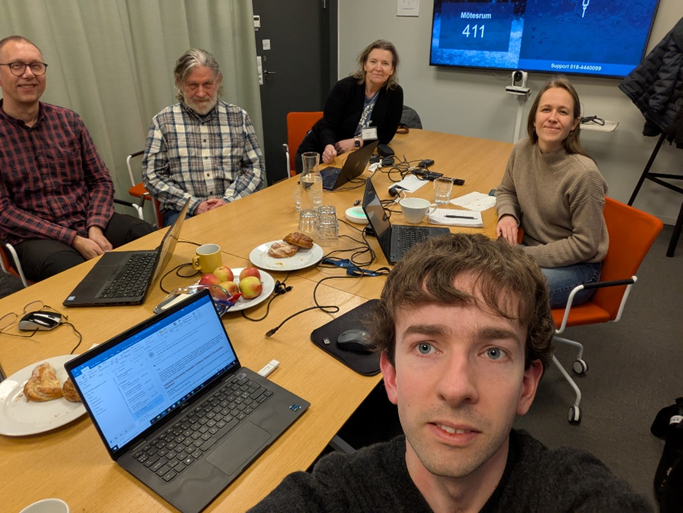
On February 4, 2025, all Swedish project partners met at the office of Stockholm Vatten och Avfall, one of the drinking water providers in Stockholm. We installed the model together and made test simulations, we planned next steps for the model application in Mälaren, the Swedish case study in the MEWS project. Some of the topics we discussed covered the different functionalities of the model, how to make model operation user-friendly, model validation, and the potential to use the model in MSc thesis projects and for tracer experiments.
-
New Paper Published on DOC Modelling
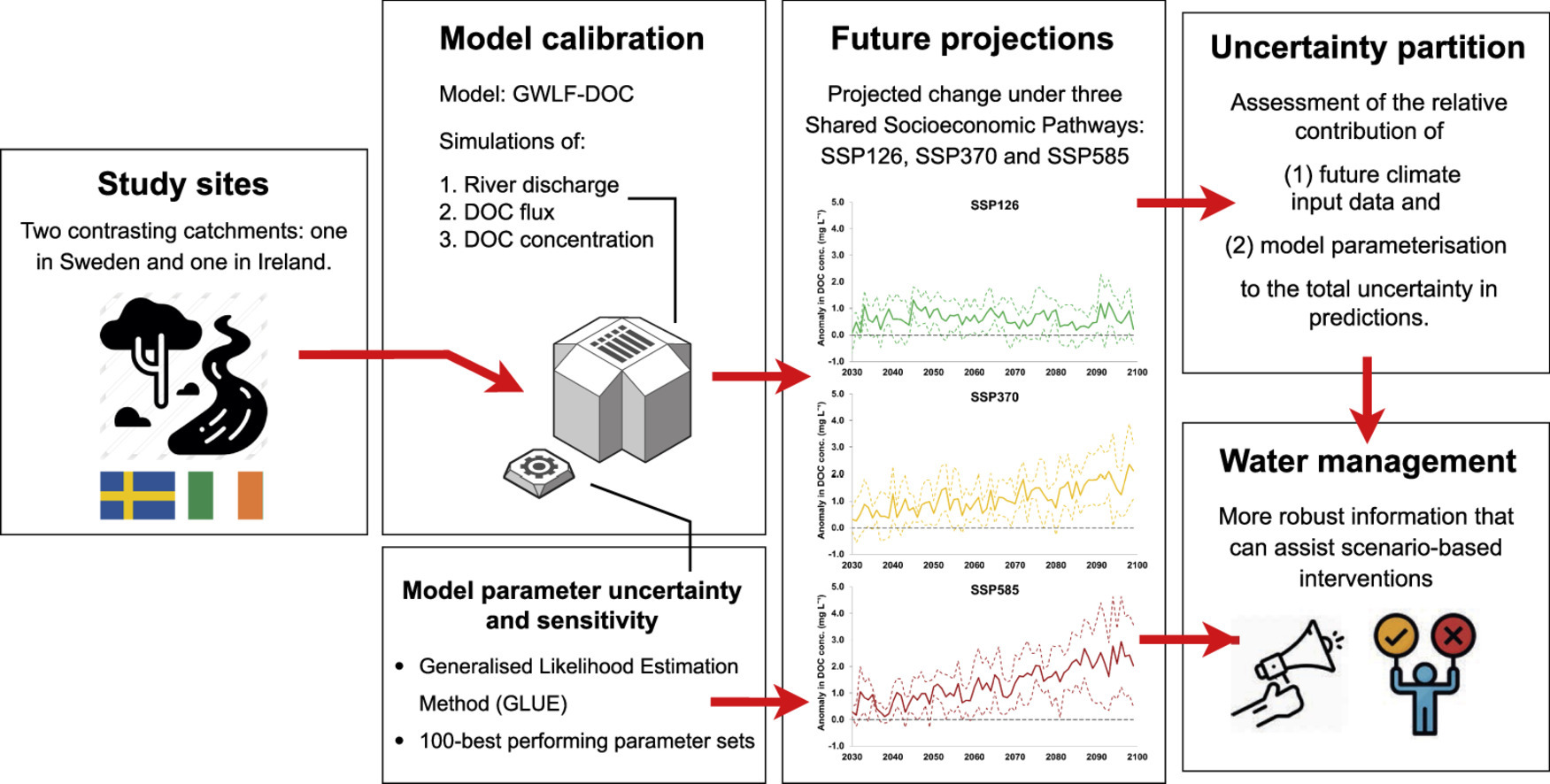
Ricardo Paíz and others have just published a new paper that demonstrates a modelling method for simulating the variability in DOC concentration and loading in two contrasting watersheds: One in Ireland, and the other draining into Lake Mälaren. MEWS is presently using this model to simulate the hydrologic input to the lake under historical and future climate conditions. We plan to also use it to simulate DOC loading to the lake. The open access paper is available here: https://doi.org/10.1016/j.watres.2025.123238.
-
Second field campaign at the Ohra Reservoir successfully completed
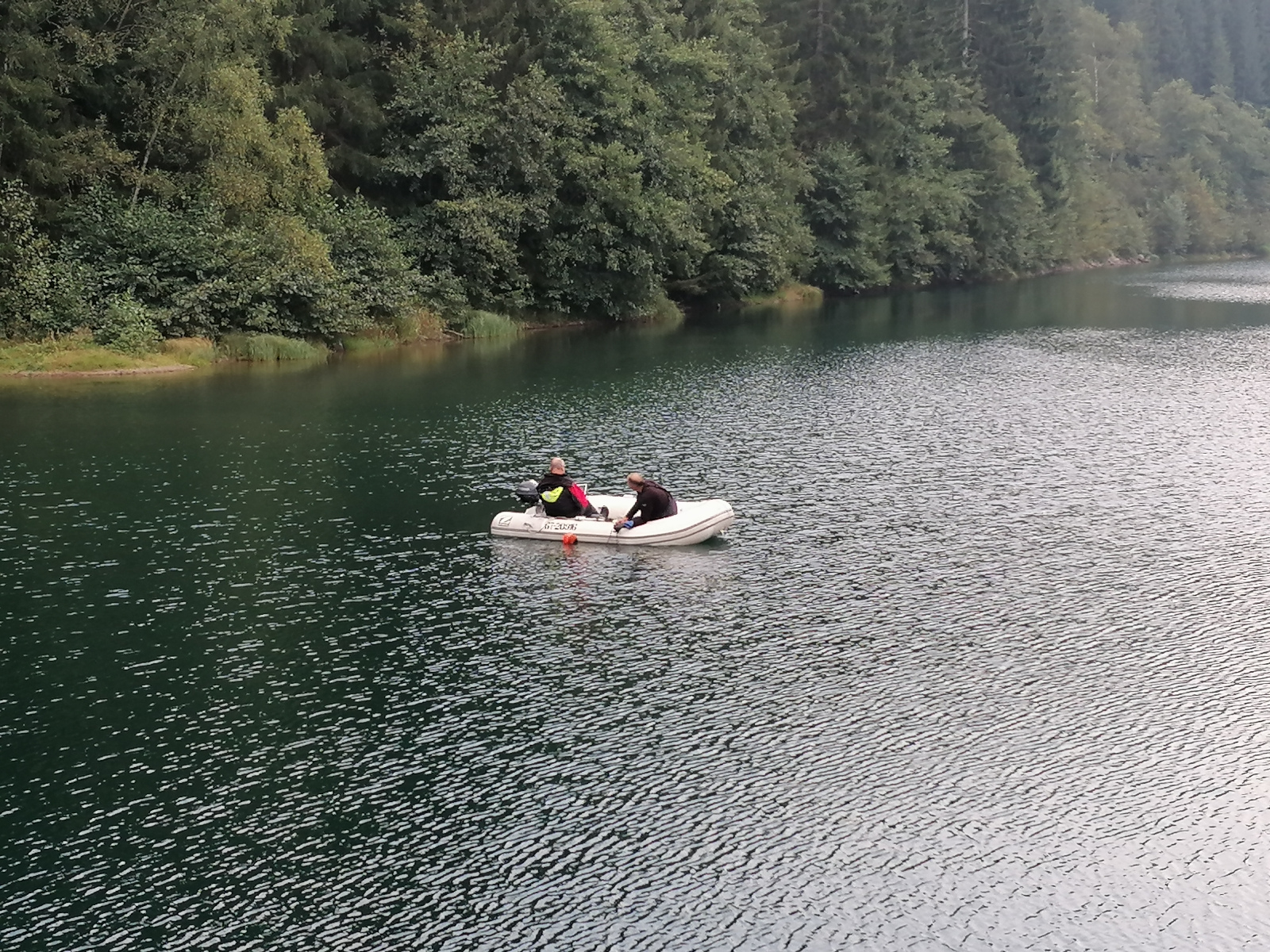
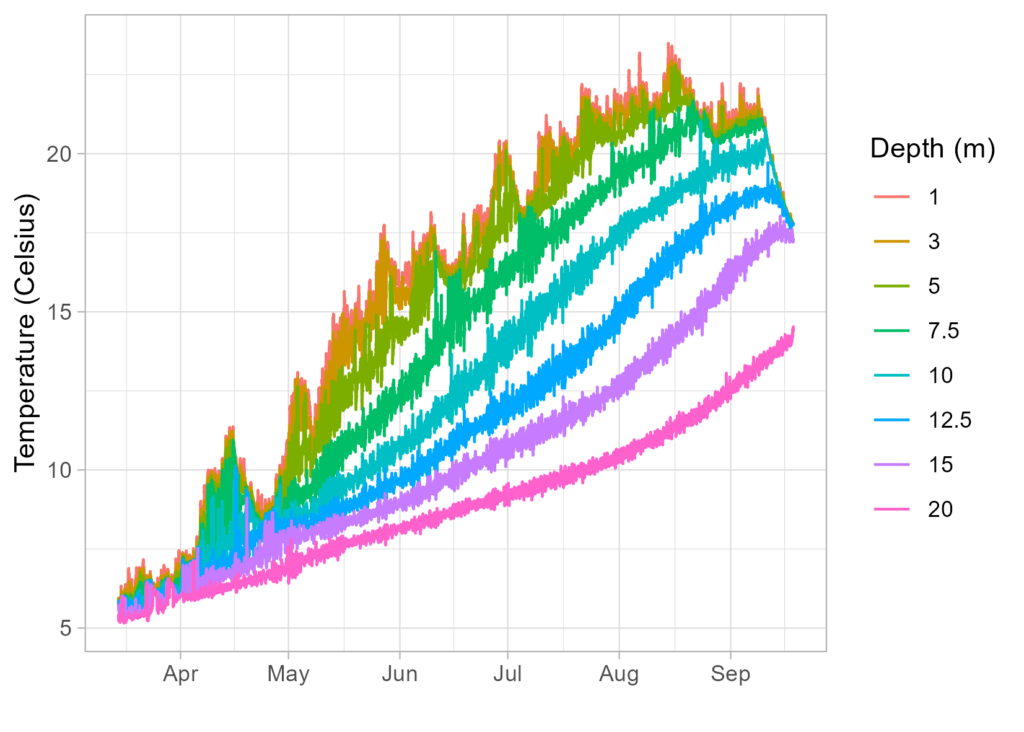
On September 17-18 2024, we performed some maintenance on the monitoring equipment at the Ohra Reservoir (Germany) and retrieved the first set of data. This data will help us calibrate the models we are developing. The equipment we deployed included thermistor chains, which continuously measure water temperature at different depths, and an ADCP (accoustic doppler current profiler), which measures the veloctiy of water currents at different depths. Here is a first glimpse of the temperature data, which look good!
-
MEWS Project Kickoff Meeting in Leipzig Germany
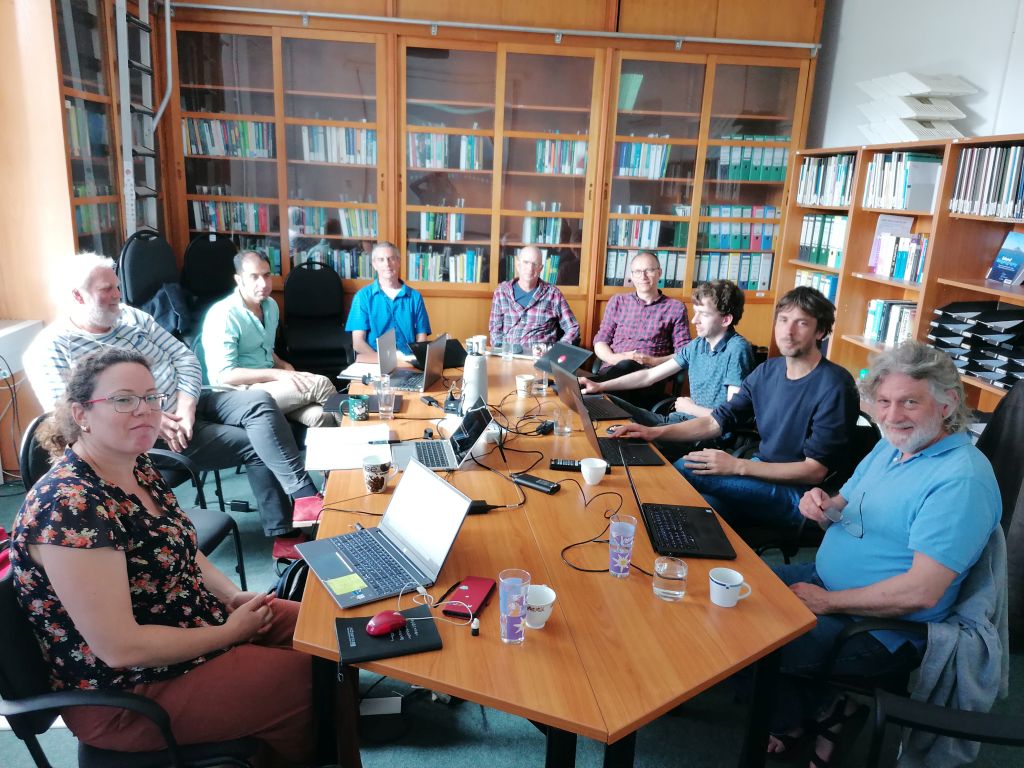
The MEWS project had its first Project-Wide in person meeting in between 16-21 June at the UFZ campus in Leipzig Germany. The purpose of the meeting was threefold
- To provide all the scientific partners the opportunity to update one another on the progress at their study site to date, and to identify any issues regarding data collection, data processing and modelling that have so far been identified.
- To convene a project-wide meeting with the stakeholders at all sites. To present the project and it goals, and to obtain feedback on what water quality issues were of greatest importance to each stakeholder. To discuss how each stakeholder could best interact with the project.
- To have a modelling workshop that would allow each site to set up and run a preliminary version of the GETM 3D hydrodynamic model. This will be the modelling starting point for the project simulations.
All of these goals were successfully achieved. Each site provided an overview of progress made. While the MEWS project officially started in mid-April of 2024, work has been ongoing to collect the data needed to begin lake/reservoir model simulations. The data collection efforts were reviewed, especially in regards to the bathymetric and climate data needed to run the GETM model.
We made a trip to the German study site, Ohra Reservoir, where we met directly with the reservoir operators and remotely linking in to the Swedish and Israeli stakeholders. The project was presented and valuable feedback was obtained. In particular, that simulations of changes in reservoir residence time and tracer movement would be of value. Since these are simpler than the biogeochemical process-based simulations we aim for in the future, they are a perfect first step in the modelling development. We also had a fantastic tour of the reservoir watershed and the water control structures including an inside view of the dam and the reservoir’s multi-level intake.
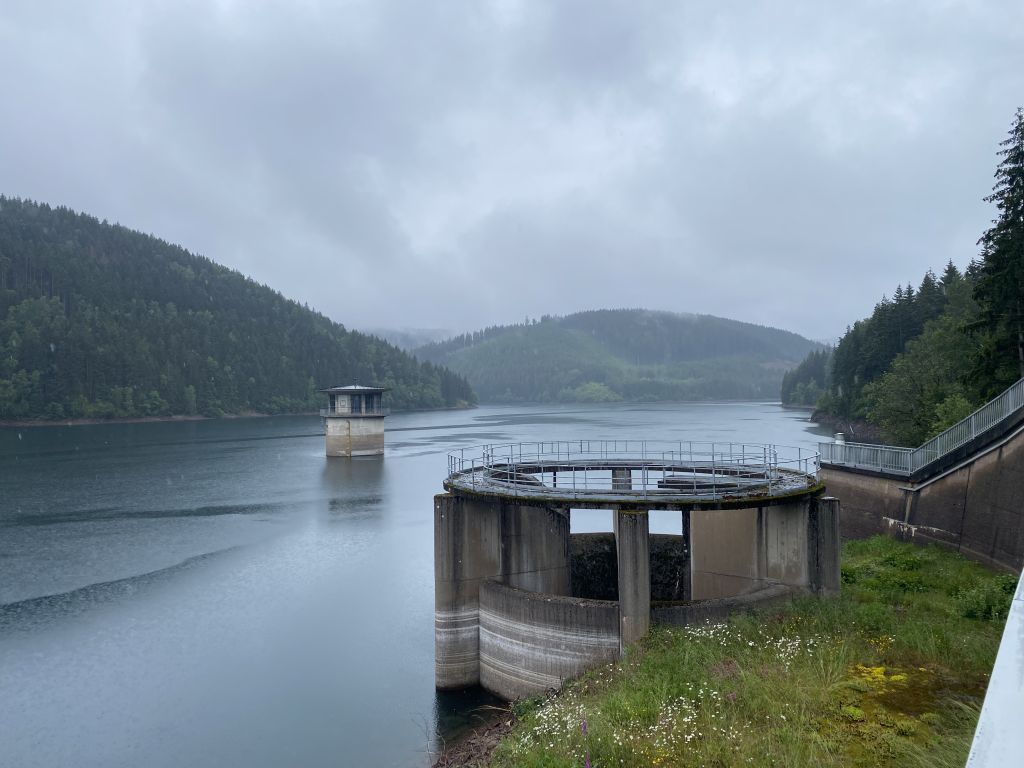
Ohra Reservoir Overflow and Mutilevel in 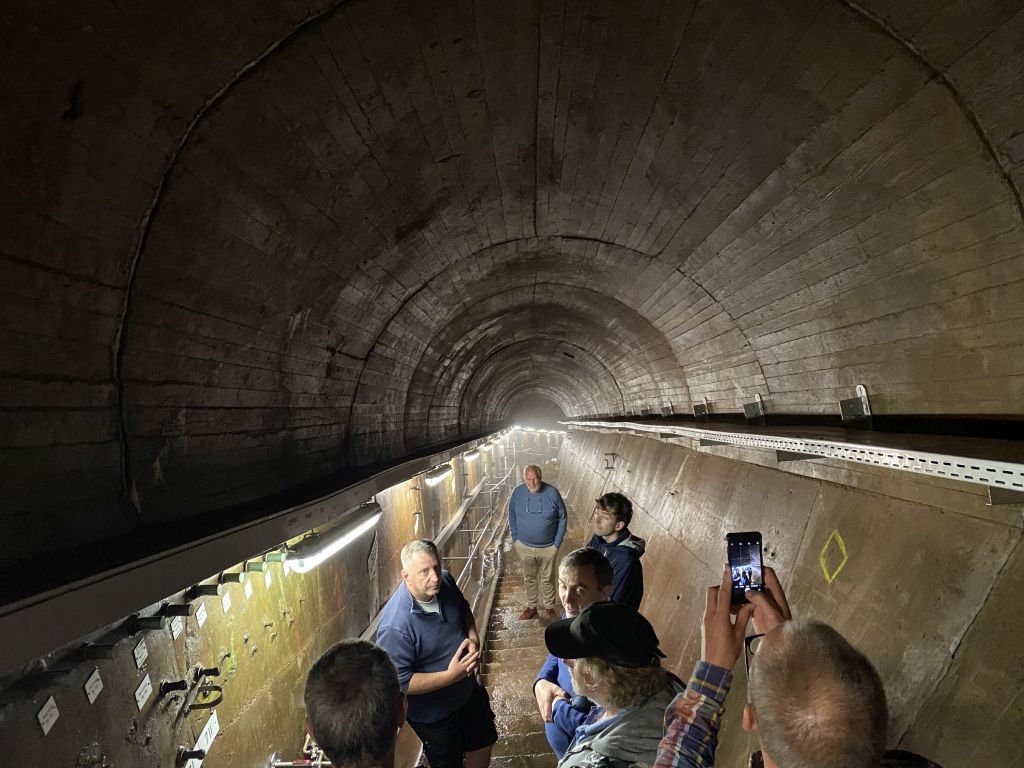
Inside Ohra Dam 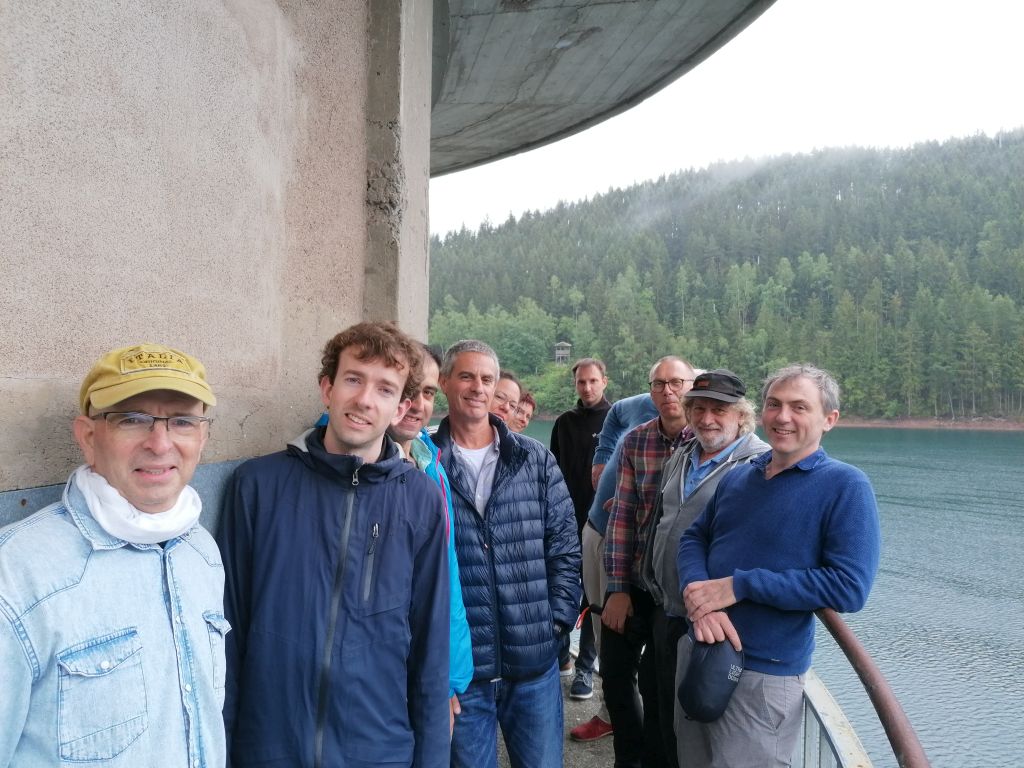
Finally, three days of our meeting were used largely to get the project lake/reservoir modelling underway. One reason we delayed the kickoff meeting to several months past the project start was to allow us to collect the data needed to set up initial version of the models by Bolding & Bruggeman our partner SME that specializes in model development and applications. The model and the workflow for running simulations were described in detail. By the end of the meeting all sites had a preliminary version of the GETM model running, which will be the starting point for developing tested hydrodynamic simulations and more complex biogeochemical simulations.
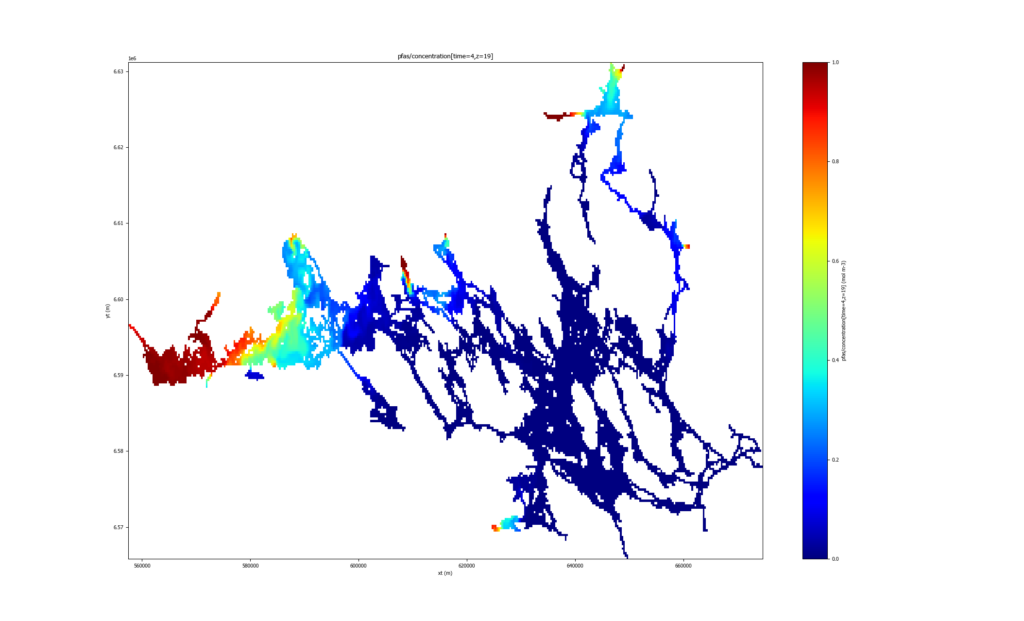
The above shows the results of an inital test simulation done at the Kickoff meeting where a conservative tracer was added to the main inflows of Lake Mälaren and its distribution is shown after 2 months time.


